
by Jason Zuidema (ICMA)
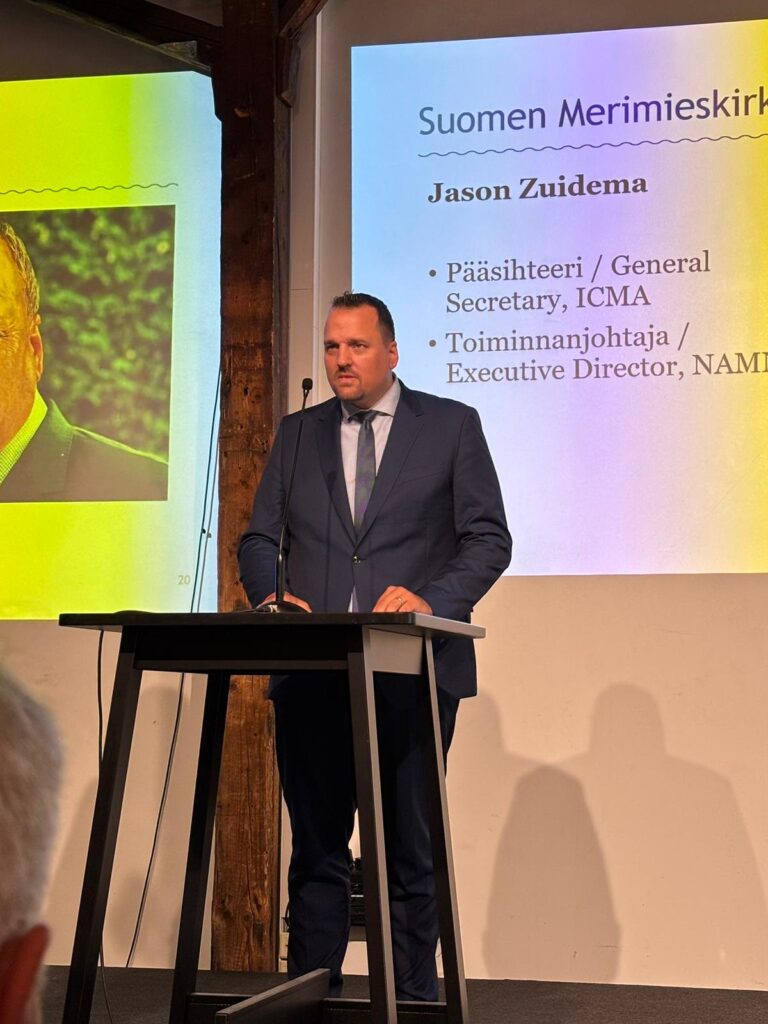
The Finnish Seamen’s Mission marked its 150th anniversary in Helsinki on the weekend of September 20–21 with a program that combined official ceremony, music, worship, and warm fellowship. The anniversary slogan, “With you around the world,” was not only the theme of the Saturday gathering but also a reminder of the broad reach and the deep roots of this unique ministry. On Saturday, September 20, a jubilee ceremony took place in the capital. The setting was festive but not overbearing, framed by speeches from dignitaries, international guests, and church leaders, interwoven with violin music that added beauty and depth to the occasion. Tables were laden with cake and coffee, and the conversations that followed the formal program reflected the spirit of the Seamen’s Church itself: people from different backgrounds meeting, speaking, and sharing life together. Among the guests were Dr. Jason Zuidema, General Secretary of the International Christian Maritime Association (ICMA), as well as ICMA trustees Rev. Selma Ravn from Denmark and Rev. Matthias Ristau from Germany. Rickard Jönsson represented the Swedish Church. Their presence, along with many Finnish partners, highlighted the ecumenical and international ties that have always been central to the Mission’s work.

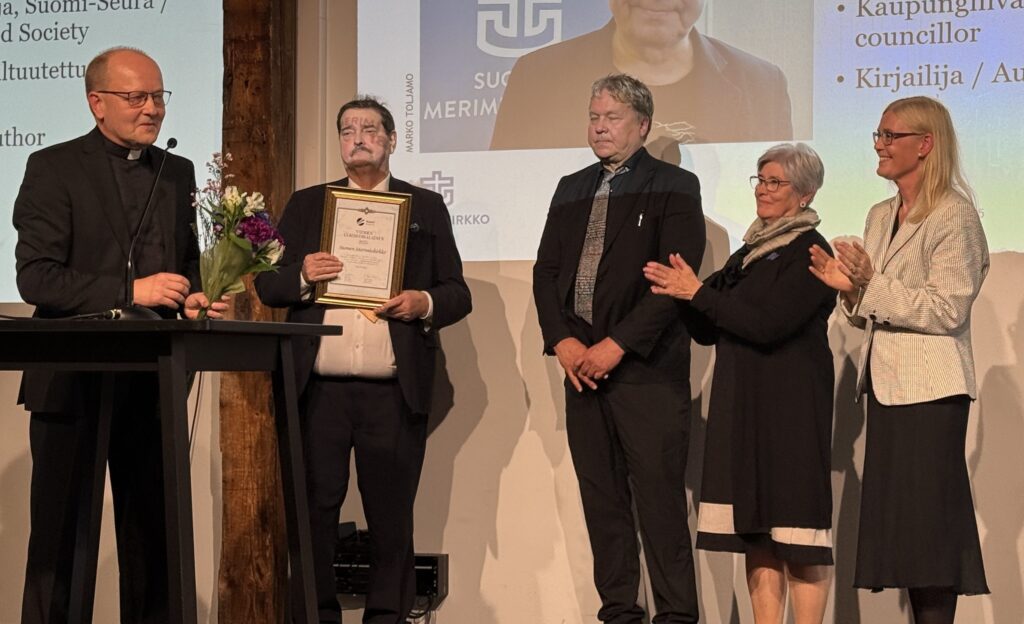


The ceremony offered not only reflection on the Mission’s history but also information about its present scope. The 150th anniversary will have been marked by 150 different events in Finland and around the world. Such numbers symbolize a vibrancy that extends beyond a single weekend. Equally significant was the announcement that in this jubilee year, based on an agreement with the Church Council, the Seamen’s Church has taken on responsibility for coordinating all church work among Finns abroad. With this expansion, the Seamen’s Church is now present in different ways in 40 countries. This is both a continuation and a renewal of its long legacy of global presence.
The story of that legacy was told repeatedly during the weekend. The founding meeting of the Finnish Seamen’s Mission was held on September 3, 1875, in the chapel of Helsinki Cathedral. Actual work only began five years later, in the summer of 1880, after much fundraising. Then the first Finnish seamen’s pastor, Ensio Väinö, at only 25 years old, was sent to England. On the ship taking him there, he gave his first sermon to Finnish emigrants and sailors working the North Sea. From that modest beginning, the Mission has grown to accompany seafarers, emigrants, and Finns abroad across generations.
Hannu Suikkonen, the General Secretary of the Mission, captured the heart of the work in his remarks. “Although my own history with the Seamen’s Church is not as long as many others—only five years in the same workplace—I feel deep gratitude for being part of this work. What, then, makes the Seamen’s Church so special? The answer lies in meaning. Employees and volunteers here do work that has deep meaning, because it happens close to people—for their sake and for the sake of their communities. This experience of meaningfulness is at the heart of the Seamen’s Church, and it is also my own personal experience.” He also extended a warm word of welcome to the international guests: “It is especially wonderful to welcome our international friends: ICMA, and representatives from Germany, Denmark, and Sweden. Your presence here means a great deal to us and makes this celebration even more valuable.”
Timo Lappalainen, Finnish Seamen’s Mission chairman, emphasized the values that define the Mission. “Here we can find some of the most important values: hospitality, love of neighbour, the sharing of hope, and community. These are not just abstract ideas; they are lived out here. But in this anniversary year, what I find most important to emphasize is our common commitment to the work of the Seamen’s Church.” His words underlined the sense of continuity: the Mission has not only survived but has grown because people have continually recommitted themselves to these values.
The international guests placed the Finnish Mission’s work in a global context. Dr. Jason Zuidema brought greetings on behalf of ICMA, reflecting on the continuity of the Mission’s service. “Today, as we celebrate 150 years, we also recognize the remarkable consistency of this Mission’s witness. It is no small thing to serve faithfully across generations, in good times and in challenging times. Seafarers today live in a period of great uncertainty. The world itself is marked by uncertainty. In such a moment, one of the deepest needs is the feeling of home.” His words echoed the Mission’s motto of being with people around the world, not simply in one place.
Pastor Selma Ravn, General Secretary of the Danske Sømands-og Udlandskirker, pointed to mobility as a major challenge. “Another challenge is mobility. People move around much more now than they used to. And at the same time, the world has become more nationalistic. That creates difficulties for us in reaching people abroad, but it also makes our presence even more important.” Her comment linked the historic concern for Finnish seafarers with the contemporary reality of migration and international mobility.
After the ceremony concluded on Sunday, Pastor Matthias Ristau, General Secretary of the Deutsche Seemannsmission, explained why ecumenical presence matters. “It was very important for us at the German Seamen’s Mission because we work closely together in many places around the world, and we see ourselves as very similar organizations. That cooperation and connection with the Finnish Seamen’s Mission is truly important for us.” When asked why ecumenism matters—not just partnership, but the Christian character of it—he responded, “Because the way we care for seafarers is something very special. In many places, seafarers are simply not regarded as human beings. At the heart of our Christian faith is the conviction that every human being is indeed a person, dignified by God. That is what unites us across all Christian organizations that care for seafarers.” His statement tied the Finnish jubilee to a broader ecumenical movement, in which respect for the dignity of seafarers is a central mark of Christian service.
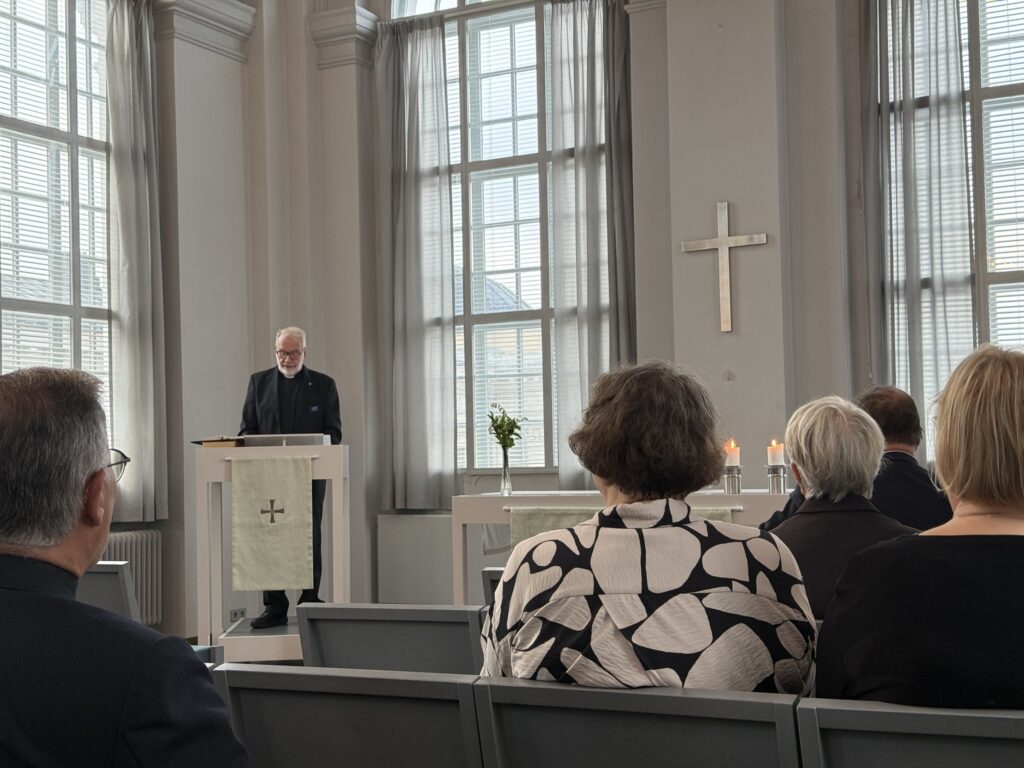
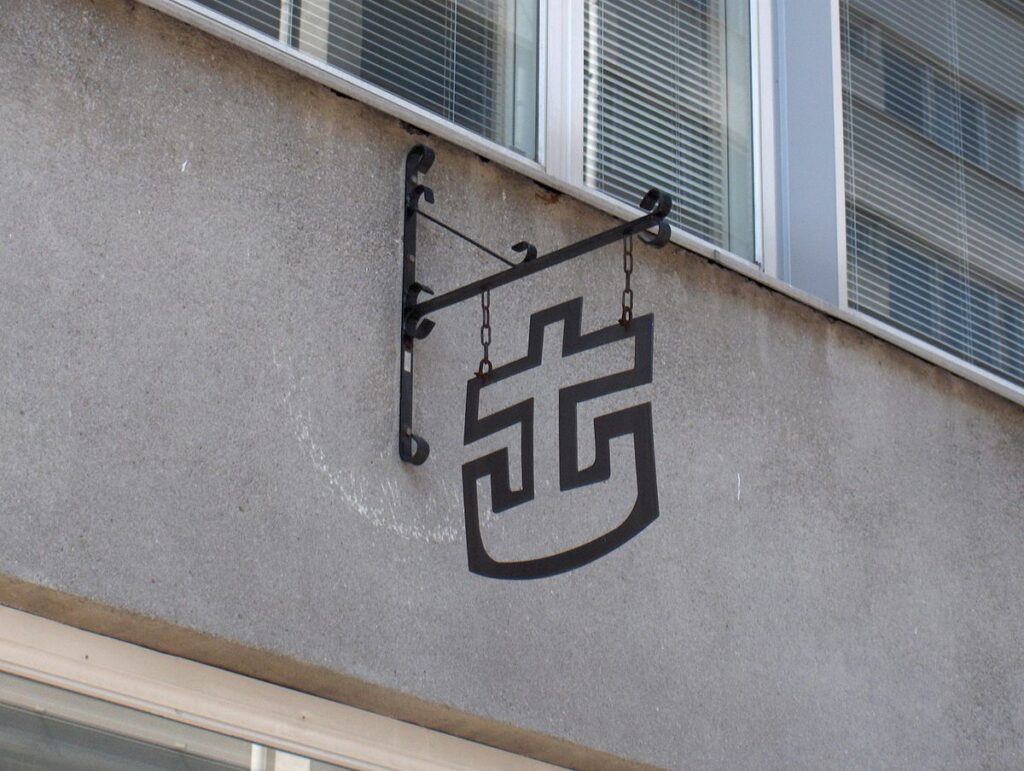
The jubilee weekend continued on Sunday morning. At 9:00 a.m., morning prayer was held in the chapel of Helsinki Cathedral, the very place where the Seamen’s Church was founded 150 years ago. Hymns were sung, prayers offered, and a homily was given by an experienced Seamen’s Church leader who told the story of the Mission’s origins. He also explained the emblem: “The emblem of the Seamen’s Church, worn over many hearts, is the cross-anchor. It contains God’s promise: blessings in rich measure. The cross points to Christ, who has gone ahead to prepare a place for us in the Father’s house. It encourages us to hold fast to the hope that lies before us. That hope is the anchor of our lives: firm and secure.” His reflection connected history, theology, and identity, reminding those present that the Mission’s work is grounded in faith and hope.
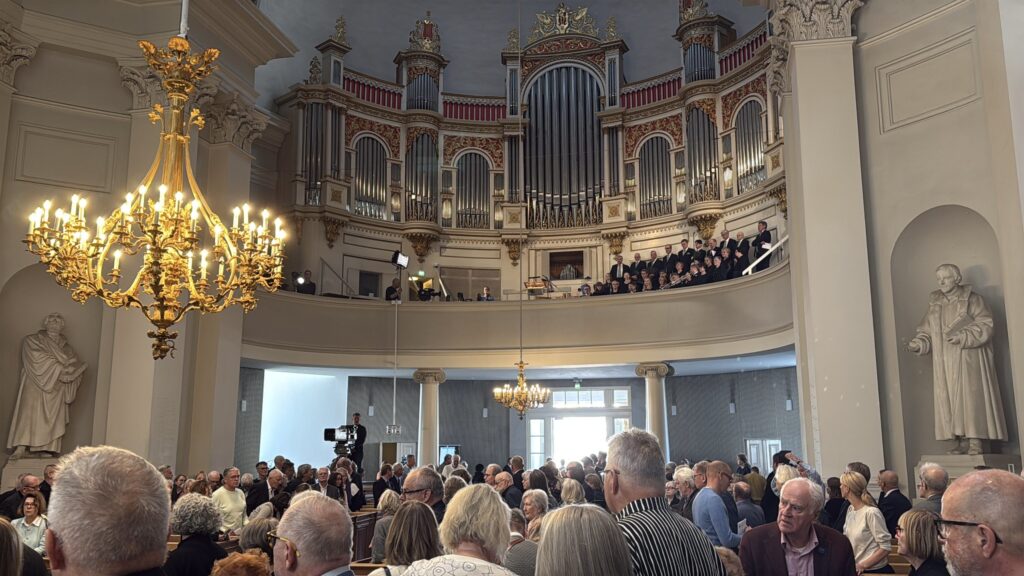
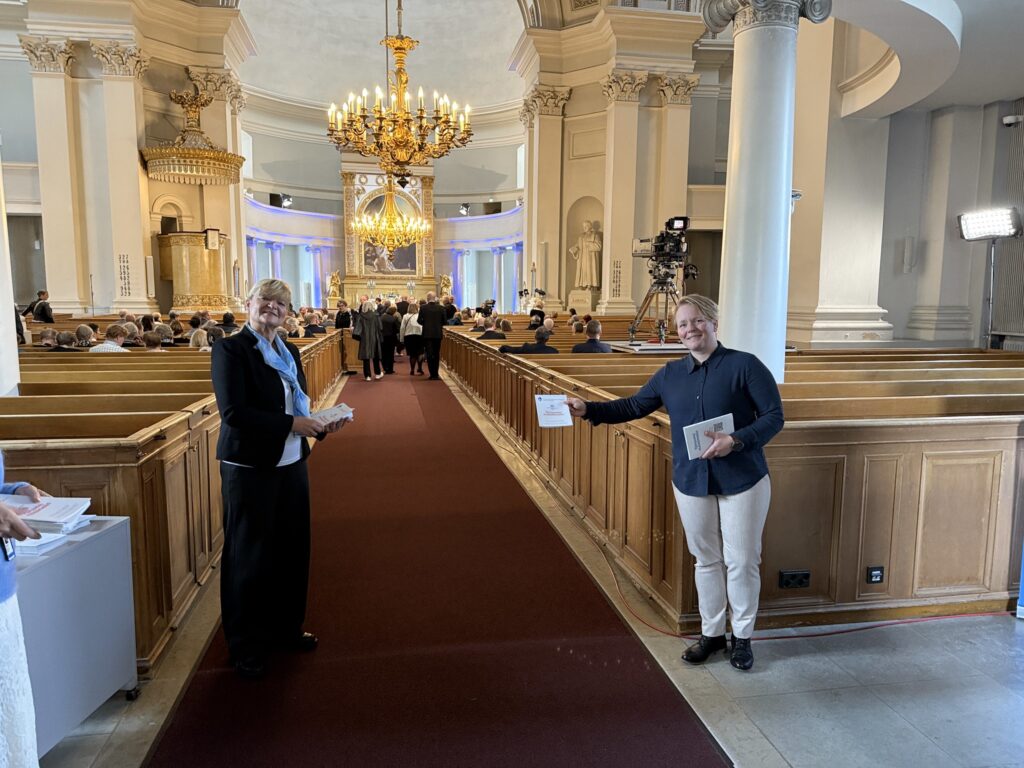
At 10:00 a.m., the grand jubilee service was celebrated in Helsinki Cathedral itself, broadcast on the national television channel. The music was splendid, with organ, orchestra, and choir, all of which lifted the congregation into worship. A bishop who has been a long-time supporter of the Seamen’s Mission preached the homily, weaving together the Mission’s legacy and its future. “For 150 years the Seamen’s Church has served seafarers, their loved ones, Finns living and working abroad, and countless visitors. Many have found in the Seamen’s Church the community they longed for, a home away from home in a foreign land, support in crises, and comfort even at the end of life.” The bishop’s words gave voice to the gratitude of many generations who have known the Seamen’s Church as a lifeline in their journeys.
The service included participation from many different chaplains, symbolizing the diversity of the Mission’s ministry across countries and contexts. Their presence also testified to the reality that the Seamen’s Church is never the work of one person or one generation alone, but of a long line of servants, both clergy and volunteers, who have given their time and energy to seafarers and Finns abroad.
Together, the weekend of September 20–21 was both a celebration of history and a commitment to the future. It combined the festive warmth of cake and coffee, violin music and conversation, with the solemnity of prayer, hymn, and sacrament. It highlighted statistics about the Mission’s growth but also returned again and again to the lived experiences of seafarers and their families, and the meaning of faith in daily life. International guests brought greetings, reminding all that this work is not done in isolation but in communion with others. Leaders emphasized values of hospitality, love of neighbour, and hope, not as lofty ideas but as practices that define the life of the Mission.