
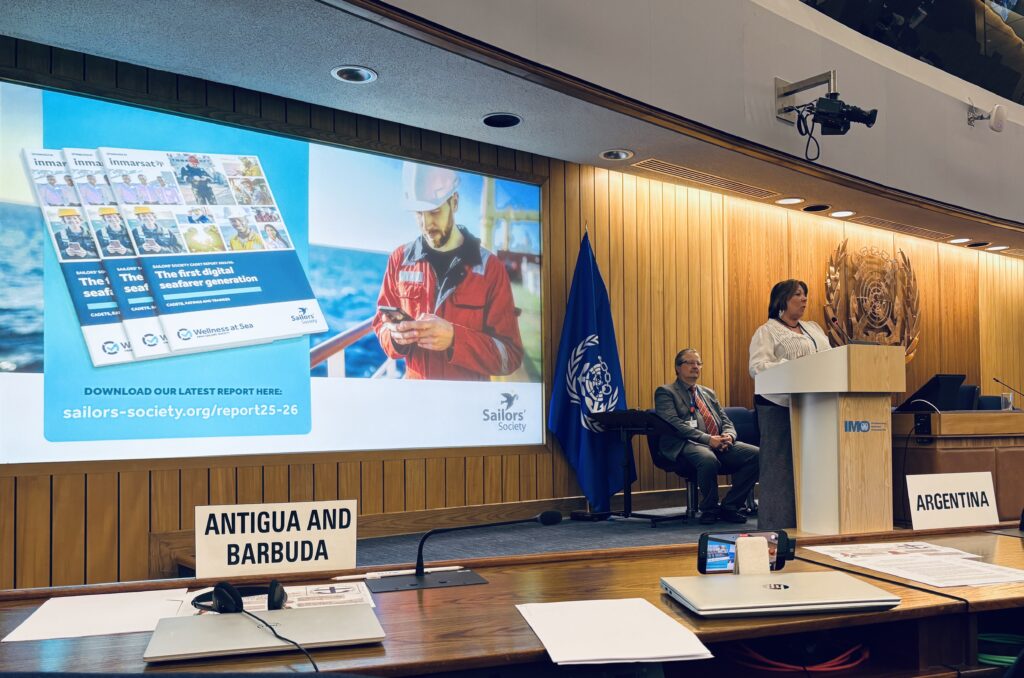
London, UK – On April 14, 2026, the International Christian Maritime Association (ICMA) convened a lunchtime presentation in the Main Hall of the International Maritime Organization during the 113th session of the Legal Committee (LEG 113). Titled “Seafarers’ Welfare in Global Perspective,” the session brought together more than 60 representatives from across the maritime sector to reflect on a simple but often overlooked truth: behind every ship is a human story.

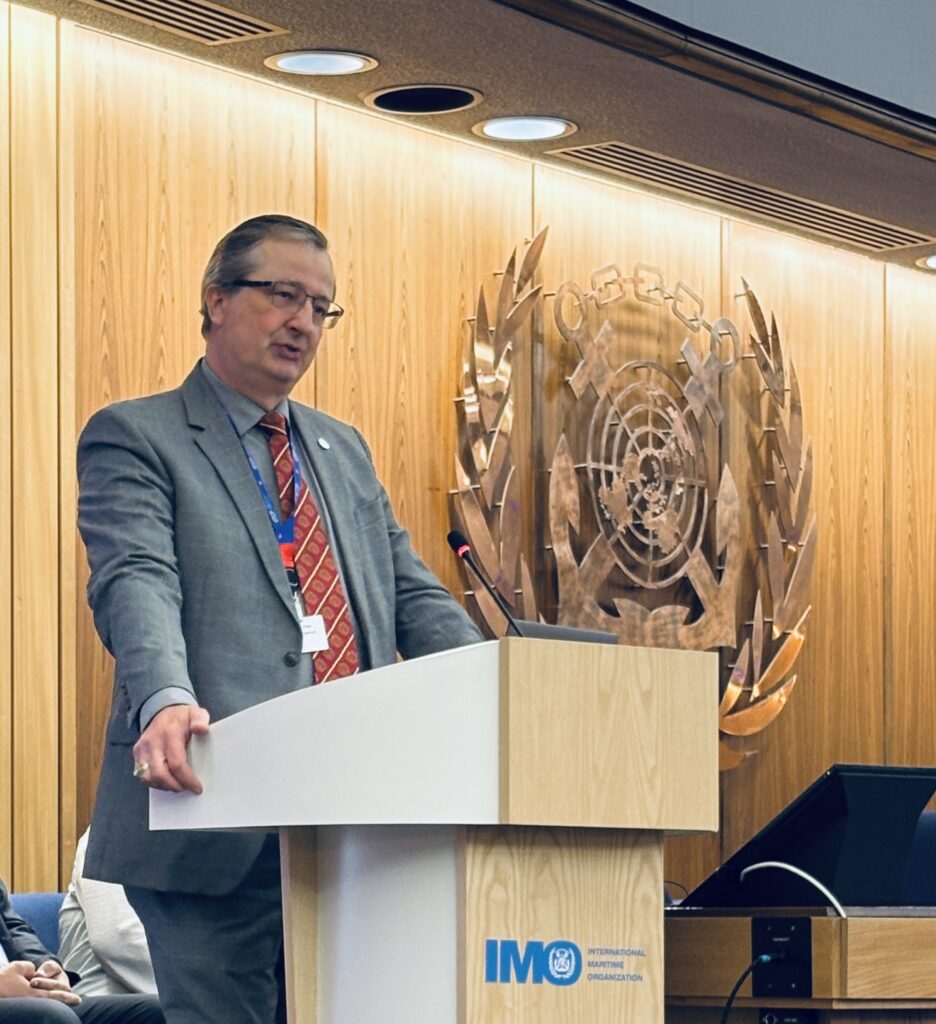

Opening the session, Dr. Jason Zuidema framed the discussion with clarity and urgency. “Seafarers today live and work in a world that is changing rapidly, and not always for the better,” he noted, pointing to the combined pressures of war, climate change, and technological transformation. While international frameworks such as the Maritime Labour Convention set essential standards, he emphasized that “there remain gaps… needs that cannot be fully addressed by regulation, by contract, or by policy alone.”
At the same time, Zuidema resisted a purely negative narrative. “Seafaring remains an essential and honorable profession,” he reminded the audience. “Seafarers quite literally make the world work.” The global economy depends on their labour, and that reality, he argued, “calls for a response… to ensure that those who sacrifice themselves for the prosperity of the global economy are themselves supported, respected, and cared for.”
That response, in part, comes through seafarers’ welfare organizations. Representing 27 member bodies across more than 800 ports, ICMA coordinates a global network that operates at the human level: visiting ships, running seafarers’ centres, advocating in complex cases, and increasingly providing digital support. These services, Zuidema explained, complement the regulatory work of institutions like the IMO by addressing the lived realities of seafarers in real time.
The panel that followed grounded these themes in concrete experience.
Phil Schifflin of the Seamen’s Church Institute spoke compellingly about shore leave, beginning with the image of a chaplain descending a gangway with Christmas gifts for seafarers. That gangway, he observed, is “both a symbolic and actual physical linkage of the ship to the shore.” Yet increasingly, that connection is broken. “All too often, a seafarer will… board the ship, to remain aboard until his contract ends.”
Schifflin highlighted the human cost of this shift. Seafarers, he noted, “live where they work and work where they live,” without the basic opportunity to step away from stress that most shore-based workers take for granted. Shore leave is not a luxury but a necessity for mental health and well-being. While recent amendments to the Maritime Labour Convention may help, he urged those present to act now: “I ask you to use that influence to help these seafarers experience shore leave again.”
Turning to another urgent issue, Tomi Toluhi of The Mission to Seafarers addressed the growing problem of seafarer abandonment. “Day in, day out, our teams are on the ground, responding to seafarers in real time,” she explained, particularly where formal processes move slowly. In one recent case in the United Arab Emirates, her colleagues boarded a vessel to find crews unpaid for six months and provisions entirely depleted, “completely empty, except for a single bag of flour.”
The response was immediate, delivering food and water within hours. But as Toluhi stressed, the impact goes far beyond physical need. “The mental health toll on crews trapped in these situations is severe, and it compounds by the day.” With at least two abandonment cases each week, the issue is systemic, requiring coordinated partnerships between welfare organizations, governments, and industry. “The seafarers waiting on those vessels cannot afford for us to do anything less,” she concluded.
The final presentation, by Melanie Warman of Sailors’ Society, turned attention to mental health and the next generation of seafarers. Highlighting the organization’s shift toward digital support, she noted that being “almost completely virtual” allows them to reach seafarers and their families “24/7,” wherever they are in the world.
Warman focused particularly on cadets, describing them as “the first digital seafarer generation.” Drawing on extensive data, she pointed to new pressures facing young seafarers, including social media expectations, cyberbullying, and uneven confidence in coping with isolation and trauma at sea. “Today’s cadets are navigating pressures that previous generations never faced,” she said, underscoring the need for early and sustained support.
In his concluding remarks, Zuidema drew these threads together. The stories shared were not isolated, but indicative of broader global realities. Whether in shore leave restrictions, abandonment cases, or mental health challenges, the need for coordinated action is clear. Welfare organizations, he emphasized, are “not a replacement for the responsibilities of industry, governments, or labour partners. But they are a necessary complement.”
Operating face-to-face and in real time, they bring the lived experience of seafarers into international discussions, including those at the IMO. They also offer practical pathways forward, from strengthening port-based services to developing partnerships and sustainable funding models.
The session closed with a reminder that resonated across the room: “If we do not speak for them, their voices may not be heard.”
See ICMA’s website for a list of its members icma.as.