
by Jason Zuidema (General Secretary, ICMA)
On Monday afternoon, September 15th, during London International Shipping Week, I attended an event called There’s Always More to Sea: An Update on the National Careers Awareness Campaign. Organized by the Merchant Navy Training Board, the gathering provided a detailed look at the Careers at Sea National Awareness Campaign, a national effort to lift the profile of maritime careers across the United Kingdom. My interest in the event was not directly as an employer in the industry but rather from the perspective of seafarers’ welfare. Welfare groups stand alongside those working at sea to support them in their professional and personal lives, and in so doing they gain unique insight into the challenges of recruitment and retention. For that reason, the campaign struck me as particularly interesting. It is not a promotional push by a single employer or even a cluster of companies; it is instead a broad, national attempt to tell a story about the maritime world itself. That ambition makes it rather unique in the world and worthy of close attention.
The Merchant Navy Training Board began the campaign by recognizing that much of the general public still does not understand what commercial shipping actually is. Confusion with the Royal Navy is common, and the larger reality is that the vast role of shipping in daily life remains invisible to many. Britain is an island nation, dependent on the sea for the overwhelming majority of its trade, yet the public rarely has cause to reflect on this dependence. The campaign therefore set out not primarily to drive recruitment numbers, though that may come as a result, but to create national awareness. It aimed to answer basic questions: What does commercial shipping look like? Who works in it? Why does it matter? In short, the campaign is as much about dispelling “sea blindness” as it is about filling vacancies.
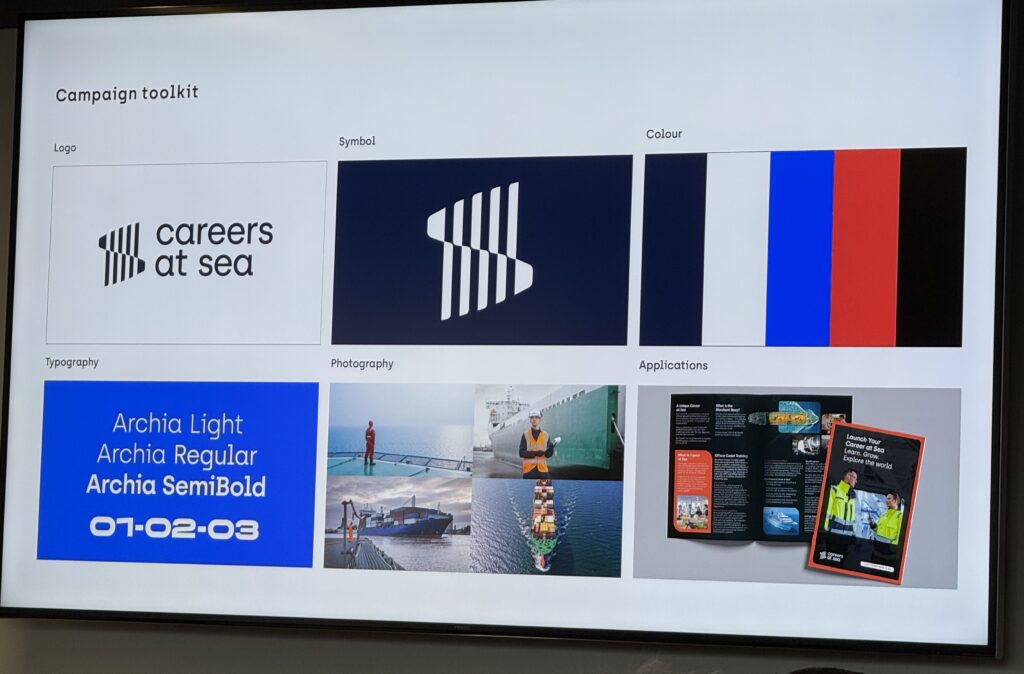


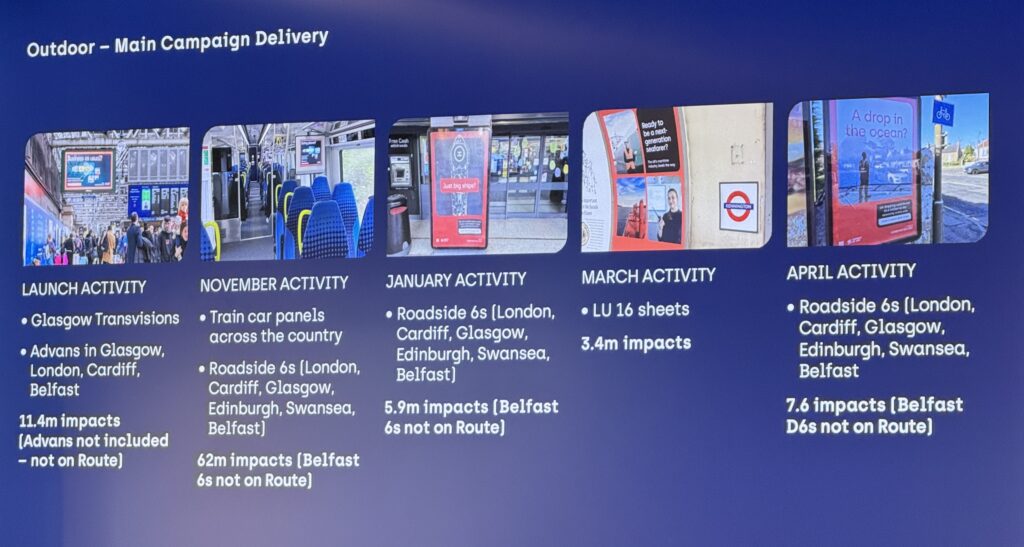
To craft its message, the organizers consulted widely with cadets, training institutions, and industry representatives. They asked what motivated people to join, what they valued about their careers, and who had influenced them. Parents stood out as especially important, shaping choices in ways that no advertising alone could achieve. Yet until now, very little communication about maritime careers was directed at parents or school career advisers. That insight broadened the campaign’s audience beyond young people themselves to include those who influence them most. Cadets spoke of wanting to travel the world, to seek adventure, to gain secure employment, and to enjoy training that would not leave them with crushing debt. Many were drawn by the opportunity to engage with advanced technology and to work in a global industry at the cutting edge of trade and innovation. These insights became the backbone of the advertising approach, ensuring that the messages were authentic and resonant.
The creative agencies working with the Merchant Navy Training Board refreshed the Careers at Sea brand, designing a modern logo, bold typography, and a distinctive color palette. They chose a deep red reminiscent of the paint on ships’ hulls to stand out against the expected blues and whites of maritime imagery. The central tagline, There’s Always More to Sea, became the unifying theme. The phrase captured both the adventure and the breadth of opportunities at sea, while also reminding audiences that the maritime world is larger than they might imagine. Photography and video reinforced the message, mixing high-quality commissioned images with authentic contributions from cadets and training settings. Ships, simulators, and engineering technology featured prominently, appealing to young people with an interest in science and technology. At the same time, the campaign deliberately reflected diversity, portraying women, people of color, and different cultural backgrounds, showing that the industry is open to all and aspires to be even more inclusive in the future.
The advertising itself spread widely across the country. It launched in Glasgow in October 2024 and quickly extended nationwide. A mix of digital and traditional media meant that the public encountered the campaign in multiple contexts: online through YouTube, TikTok, and search ads; in gaming environments where reward videos captured attention; in train carriages and bus shelters through posters; and on billboards in major cities. This multi-channel approach ensured repeated exposure, which is essential for recognition. In its first year the campaign delivered nearly 150 million impressions, with about 190,000 clicks driving viewers to the refreshed Careers at Sea website. That site saw a steady 20% month-on-month increase in traffic, with many users returning, suggesting that curiosity once sparked could grow into deeper interest. Along the way, the campaign team tested different formats, learned what worked, and adjusted spending. For example, they found that younger audiences often responded more strongly to images of ships and technology than to pictures of people. Such findings not only strengthened the campaign itself but also provided lessons for anyone interested in public promotion of maritime careers.
The results were encouraging in other ways as well. About 40% of those who engaged with the campaign online were women, a significant figure given the small number of women traditionally represented in seafaring. The campaign does not in itself solve the structural challenges of creating a more inclusive industry, but it shows that messaging can reach a wider audience. Regionally, cities like London, Birmingham, and Manchester saw strong engagement, proving that interest can be cultivated even far from the coast. The campaign also showed the value of a balanced approach to diversity, reflecting the current industry while also pointing toward what it hopes to become.
From my perspective in seafarers’ welfare, the campaign is especially instructive. Welfare organizations are not advertisers, yet we constantly wrestle with the perception of seafaring. If the profession is seen as hidden, unappealing, or outdated, recruitment suffers and retention becomes harder. Conversely, when it is presented as adventurous, meaningful, and honorable, our work of supporting seafarers is strengthened. This national campaign may indeed be unique in the world, for few other countries attempt to raise awareness of all maritime careers at a national level. That makes the UK’s experience a valuable model, one from which others could learn. The lessons—about branding, multi-channel strategies, audience segmentation, and authentic storytelling—may well inspire similar efforts elsewhere.
Looking ahead, the Merchant Navy Training Board has secured funding for a second year, with continued support from the UK Chamber of Shipping and the Maritime Educational Foundation. Plans include repeating the most effective strategies—particularly high-impact digital ads and train carriage posters—while experimenting with new formats and refining the targeting of younger audiences. The aim is not a one-off campaign but a sustained, long-term presence. Awareness cannot be built in a day, but over time consistent messaging can reshape perceptions and open doors.
Attending There’s Always More to Sea left me encouraged. It showed how an industry can come together to present a united story, bigger than any single employer. It demonstrated the creativity and professionalism of the teams behind it. And it underscored that awareness matters: not just to fill training berths, but to ensure that society sees seafaring as it truly is—an honourable profession with great benefits, challenges, and a promising future.