
From June 11 to 14, 2025, maritime health professionals from around the world gathered in Rotterdam for the 17th International Symposium on Maritime Health (ISMH17), hosted by the International Maritime Health Association (IMHA). The event brought together medical practitioners, researchers, policymakers, welfare providers, port officials, and representatives from international organizations. It was a unique convergence of disciplines, perspectives, and passions, all focused on one goal: improving the health and wellbeing of the world’s seafarers.


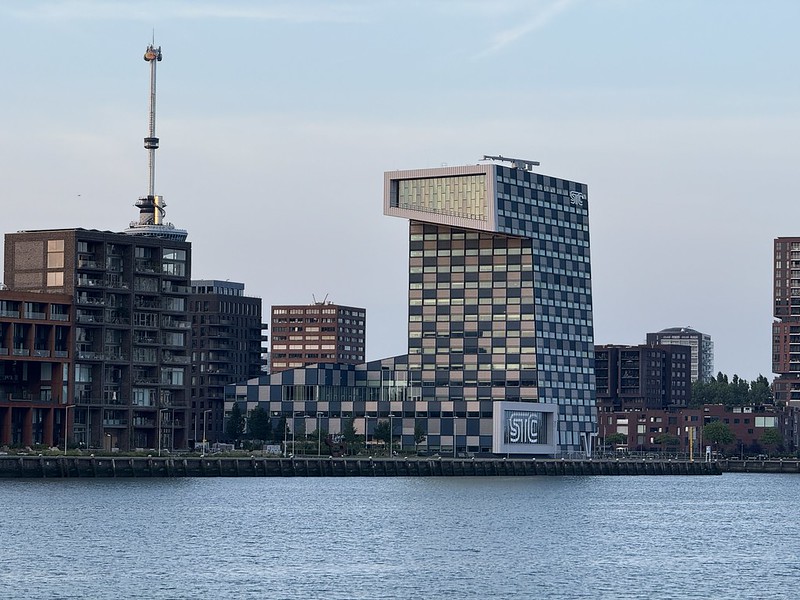
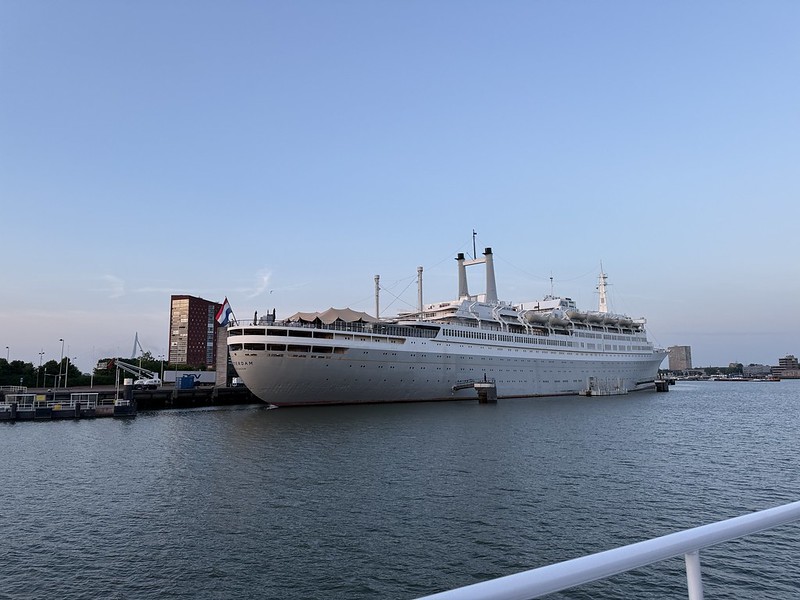
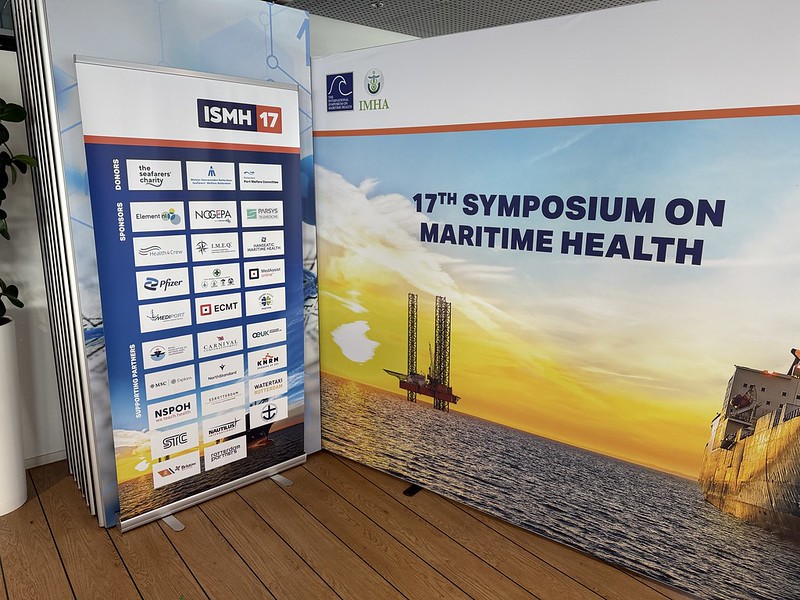
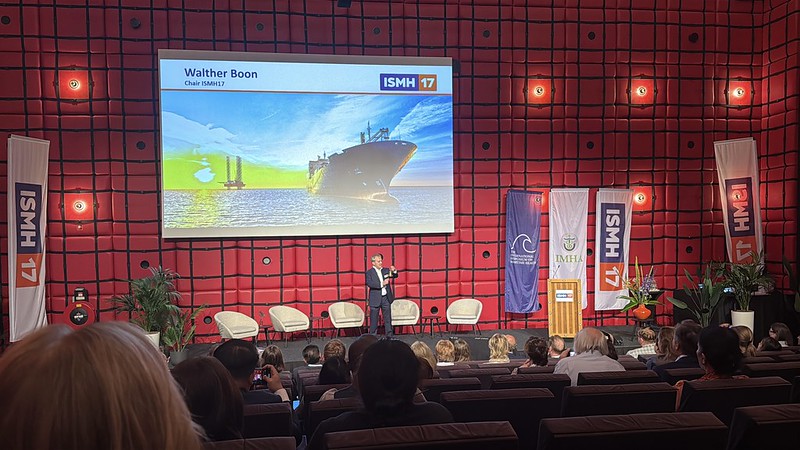
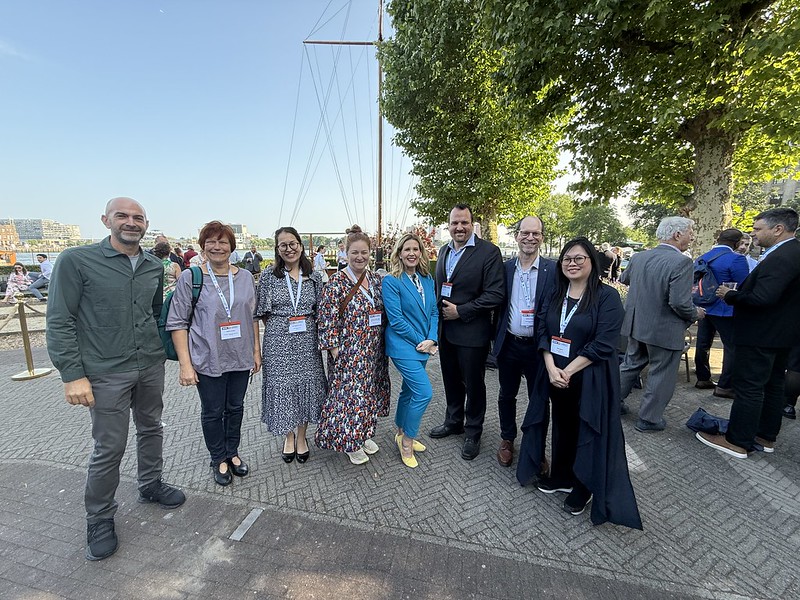
The International Christian Maritime Association (ICMA) was privileged to be present and to contribute to the conversation. ICMA represents a global network of Christian organizations dedicated to the holistic care of seafarers, and it was truly heartening to see that the well-being of seafarers—both physical and emotional—was a central theme at this year’s symposium. ICMA members have long argued that seafarers’ health is not only about treating illness but also about creating conditions for a life lived with dignity, connection, and meaning. That message was echoed and reinforced time and again throughout the four days in Rotterdam.
The tone of welcome was set from the very beginning by Dr. Walther Boon, chair of the symposium, whose warm and generous hospitality made every attendee feel like part of a larger, caring community. The social program, including a reception at the Royal Maas Yacht Club, a port tour by boat, and a dinner aboard the historic SS Rotterdam, added a personal and enjoyable dimension to the days together. It was clear from the outset that this was not just a technical conference but a human one—grounded in relationships and shared purpose.
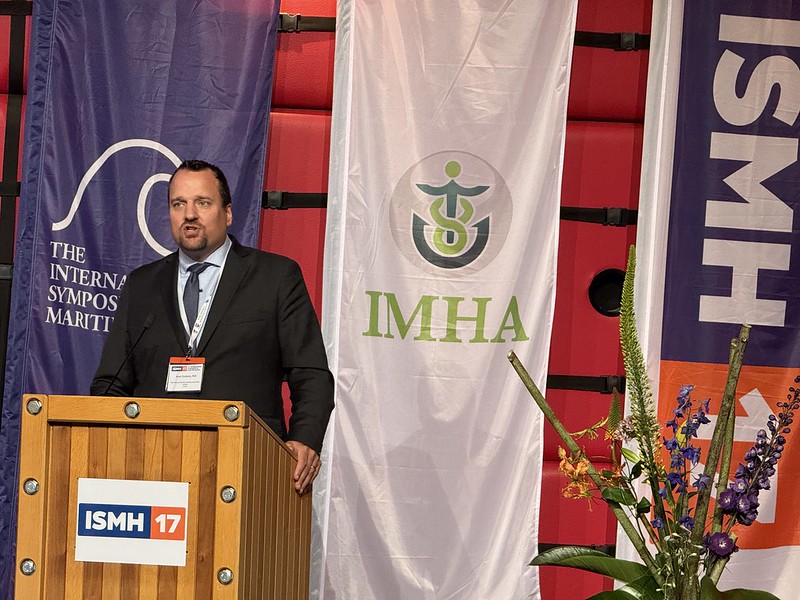
The opening day keynote address by Dr. Jason Zuidema, General Secretary of ICMA, brought attention to the urgent issue of shore leave. “We work alongside each other in port areas,” Zuidema noted, “but sometimes we don’t know each other enough.” The fast pace of modern shipping logistics, coupled with increased automation and security, has reduced opportunities for meaningful rest and recovery for seafarers. Welfare providers often find themselves racing against the clock to offer even a few moments of hospitality, Wi-Fi, or conversation. Zuidema’s address was a call for deeper collaboration between medical and welfare communities to ensure that shore leave becomes not just a logistical possibility but a meaningful space for human contact.
Other speakers echoed and expanded on these themes. In his welcome, René de Vries, Harbour Master of the Port of Rotterdam, praised the work of the local port welfare committee and highlighted the increasing challenges seafarers face today. He described how volunteers and ship visitors provide not only practical support like SIM cards and portable Wi-Fi, but also a listening ear and a sense of home in difficult times. “Every era has its own challenges,” he said, “but our dedication to health remains the backbone of our maritime community.”
The program was rich and varied, covering topics such as infectious disease management, fatigue and burnout, trends in medical repatriation, mental health, and advancements in telemedical services (TMAS). Sessions on pre-employment medical examinations (PEMEs) emphasized the need for consistent global standards, while others addressed the inconsistent quality of onboard medical chests and the confusion surrounding medicines that often differ across jurisdictions. These are the everyday realities of medical professionals at sea—and the consequences are deeply human.
Mental and emotional well-being received special attention throughout the symposium. Rebecca Hayes-Mejía presented insights from a massive survey of over 22,000 seafarers, noting that stress amplifies the negative effects of other health and lifestyle factors. Sleep quality, loneliness, screen time, and other variables are all made worse under stress—a reality many in welfare ministries have long observed on the ground. Dr. Camille Jego gave a provocative and thoughtful presentation titled Are Seafarers Extraterrestrials? Her answer, of course, was no. But she warned that viewing seafarers as fundamentally different from “land-based” people can lead to stereotypes and ineffective interventions. Seafarers, she argued, have developed unique collective coping mechanisms shaped by their environment, but they deserve the same level of psychological care and support as any other group of workers.
The conference also saw the transition in IMHA leadership, with Dr. Rob Verbist handing over to Dr. Sue Stannard as president. Verbist highlighted IMHA’s role as a “value-driven, independent network of professionals,” emphasizing the organization’s commitment to sharing experiences, raising standards, and partnering with both industry and civil society to effect real change.
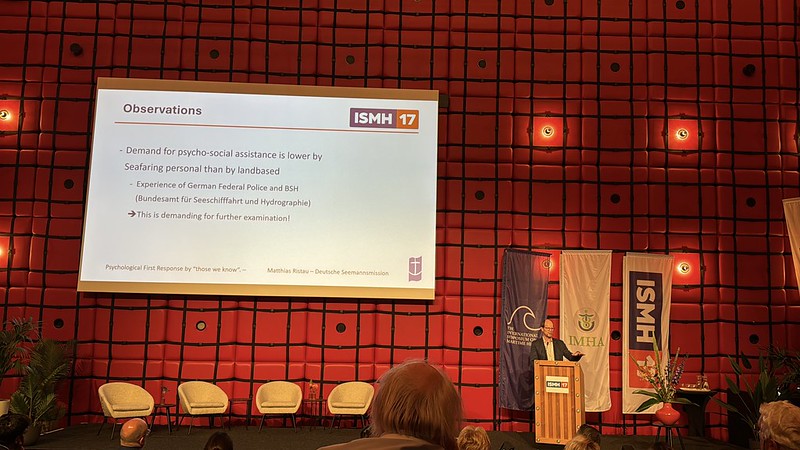
ICMA’s long-standing commitment to cooperation and ecumenism aligned seamlessly with the values expressed by IMHA throughout the symposium. The Rev. Matthias Ristau of the Deutsche Seemannsmission highlighted the vital psycho-social support his organization provides to seafarers, emphasizing the deeply human side of maritime care. The presence and contributions of partner organizations such as The Seafarers’ Charity, the ITF Seafarers’ Trust, ISWAN, and the Global Maritime Forum further reinforced the message that seafarers’ welfare and health are inseparable—two essential dimensions of the same holistic concern.
The symposium was not limited to lectures and PowerPoints—hands-on demonstrations, such as a Search and Rescue (SAR) operation outside the venue, brought urgency and realism to discussions. Presentations on the use of artificial intelligence and digital tools for health diagnostics also gave a glimpse of the future of maritime care. But whether looking to high-tech innovations or low-tech interventions like better-designed medical forms and drug kits, the focus was always on the human being at the center.
For ICMA, participation in ISMH17 was a powerful affirmation that our work belongs not only in seafarers’ centers but also in scientific conferences and medical forums. The health of seafarers is not a niche concern; it is central to the functioning of global trade and to the ethics of our interconnected world. We are deeply thankful to the organizers of ISMH17 for their inclusive spirit and for making room for welfare voices like ours at the table.
A recording of the speech of Rev. Matthias Ristau (DSM) is here. Photos and other media on our Flickr photostream.